
1
The person asks
The search is often a complete question rather than two or three disconnected keywords.
AEO is the process of creating and structuring content so that search engines and AI-powered systems can understand it and use it when giving people direct answers.
This page explains what AEO means, how it relates to SEO and GEO, and how to make a normal website page more useful, trustworthy and answer-ready.

The short answer
Answer Engine Optimization is the work of making information easy to understand, verify and use when a system needs to answer a specific question.
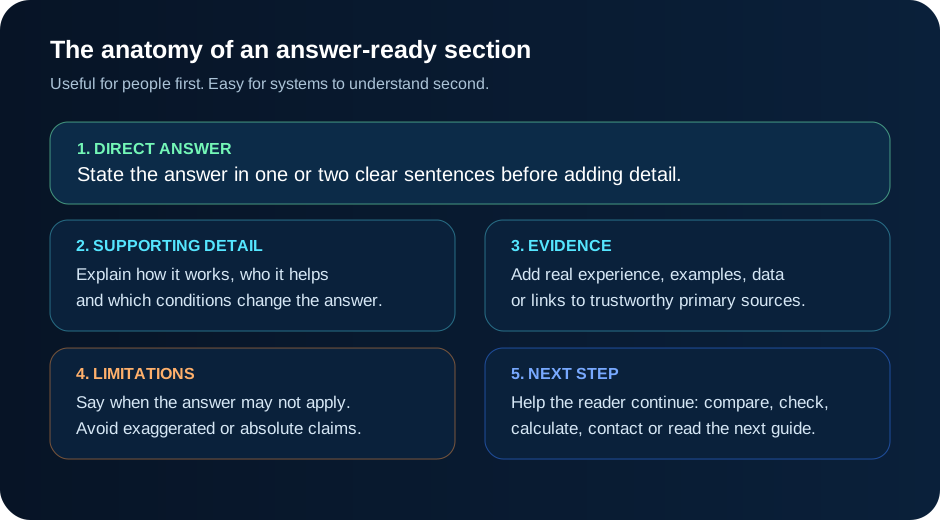
Strong AEO content normally gives the direct answer first, then adds supporting detail, evidence, limitations and a useful next step. It works alongside SEO rather than replacing it.
AEO in five minutes
An answer engine tries to solve the person’s problem directly. It needs understandable information and enough context to avoid giving a misleading answer.
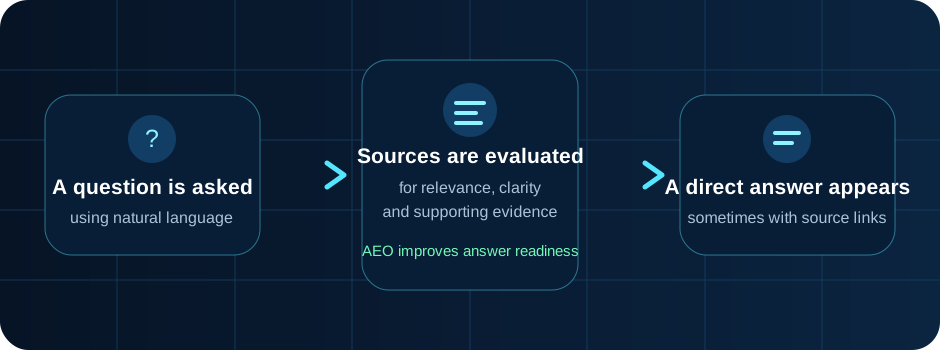
The search is often a complete question rather than two or three disconnected keywords.
It looks for relevant, understandable sources that appear useful for the specific situation.
The result may be a snippet, voice response, AI-generated summary or answer with supporting links.
A simple example
The strongest page does not begin with company history or vague sales language. It answers the question, then explains the conditions that change the answer.
A weak page may repeat “professional boiler services” without giving a useful time estimate, scope or limitation.
The page can then explain what is checked, how the customer should prepare and when a repair appointment may be needed.
Why AEO matters
Good AEO reduces confusion. It helps visitors understand a subject quickly and gives search systems clearer information to interpret when relevant.
People ask complete, detailed questions and expect an answer that understands the situation.
The best response explains exceptions, conditions and limitations instead of making an absolute claim.
Evidence, clear authorship, real experience and primary sources make an answer easier to evaluate.
AEO vs SEO vs GEO
Google describes AEO and GEO as terms used for work focused on AI-search visibility, while explaining that its generative search experiences still rely on core Search systems and established SEO foundations.
| Approach | Main focus | Typical page features | What it does not guarantee |
|---|---|---|---|
| SEO | Discovery and visibility in search results | Helpful content, crawlability, relevance, internal links, authority and technical quality | Position one, indexing or permanent traffic |
| AEO | Clear information for direct answers | Question-led sections, concise answers, evidence, limitations, tables and useful next steps | Featured snippets, voice answers or AI selection |
| GEO | Visibility as a source inside generative search | Source-worthy content, clear entities, original value, citations and broader authority signals | AI citations or brand recommendations |
Answer-ready content
AEO is not about writing robotic one-line responses. The answer must be concise enough to understand and complete enough to be trustworthy.
What actually helps
These foundations improve the page for the reader first and make the content easier for search and AI systems to interpret accurately.
Use headings that match real customer questions when that is the clearest way to organise the information.
Give the main answer in the first one or two sentences, then expand without repeating the same wording.
Explain who the answer applies to, what changes it and which assumptions are being made.
Support claims with real experience, examples, official documentation, transparent methods or reliable primary sources.
Use semantic headings, short sections, lists and tables when they genuinely improve comprehension.
Show who created or reviewed important content and why the source is qualified to answer the question.
Use JSON-LD to describe visible content accurately. Structured data can support understanding but is not a shortcut.
Keep important content public, linked, mobile-friendly, fast and technically eligible for normal search indexing.
Strong AEO practice
Weak or misleading practice
Beginner action plan
Choose a page that answers a valuable customer question. Improve that page properly before creating dozens of new pages.
Use support emails, sales calls, reviews, search data and direct customer conversations rather than guessing.
Make the opening understandable without requiring the reader to scroll through a long introduction.
Explain when the answer changes, what it assumes and who should seek specialised advice.
Add relevant experience, examples, calculations, data or links to trustworthy primary information.
Use one H1, descriptive H2 headings, readable paragraphs and lists or tables where they help.
Confirm the page is internally linked, mobile-friendly, crawlable and not accidentally blocked or canonicalised elsewhere.
Review Search Console, customer behaviour and observed search features. Do not assume a page was selected without evidence.
60-second answer-readiness check
Tick every statement that is already true. The score is calculated only in your browser and is not sent anywhere.
This is an educational check, not a ranking score or a promise that an answer engine will select the page.
Frequently asked questions
Answer engine optimization, or AEO, is the process of creating and structuring content so that search engines and AI-powered systems can understand it and use it when giving people direct answers.
No. AEO uses many SEO foundations, including helpful content, crawlability, relevance, authority and technical quality. It adds greater emphasis on direct answers and clearly structured information.
AEO focuses on creating clear content that can answer a question directly. GEO focuses more broadly on visibility and source selection inside generative search experiences. The work overlaps.
AEO can make a page easier to understand and extract, but it cannot guarantee a featured snippet. Google controls selection and may change the displayed result at any time.
No. Better content and clearer business information may improve the information available about a company, but no website change can force ChatGPT or another AI system to recommend it.
No. The visible answer and page quality matter more. Structured data should only be added when it accurately describes the page, and it never guarantees a search feature.
There is no universal word count. Use the shortest answer that is genuinely accurate, then add the context, evidence and limitations the reader needs.
No. Clear answers can also improve normal search pages, support content, voice search experiences and the experience of people visiting the website directly.
Primary guidance
The terminology around AEO changes quickly. These Google sources provide the strongest current guidance for websites seeking visibility in Search and generative Search features.
A soft next step
Send KRONATRIX one page and the customer question it should answer. We will review the visible answer, structure, evidence and basic technical foundations.
KRONATRIX authority network
Each KRONATRIX website focuses on a separate question, audience or service rather than repeating the same content under different keywords.